Loading...

Loading...

1. 343.3 billion yuan in supercomputing power orders: AI enters the era of "electric power-level competition"
On March 11, a major announcement ignited the AI industry—a chip giant and an emerging AI company reached a multi-year strategic cooperation agreement.
A massive computing power deal worth $50 billion (approximately 343.3 billion RMB) has surfaced.
This is not just a purchase order.
It is also a battle for resources vying for dominance in the future of AI.
The core of this agreement is not just the chip.
Instead, it's a complete "computing infrastructure":
➣ Next-generation GPU + CPU architecture
➣ Ultra-large-scale AI server cluster
➣ Liquid cooling system
Key point: AI competition is essentially a competition of "computing power + network".
2. 1GW computing power scale: The real bottleneck is not chips
Judging from the data, the scale of this deployment is extremely staggering:
Total power consumption: approximately 1GW (equivalent to a medium-sized city)
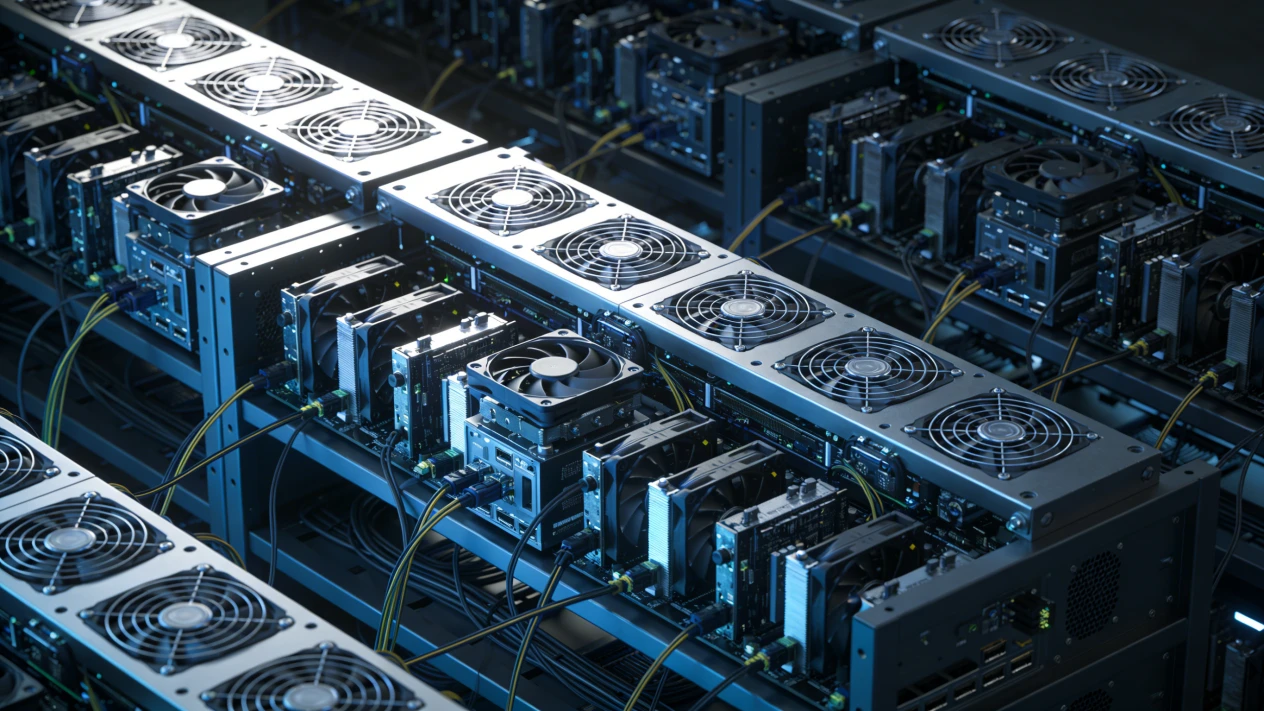
Number of racks: Approximately 8000+
GPU scale: Approximately 600,000 units
But the real question is: how to "connect efficiently" with so much computing power?
In large-scale AI training, GPUs do not work independently.
Instead, hundreds of thousands of GPUs need to work together like "a brain" to compute.
This places extreme demands on the network:
➣ Ultra-low latency (sub-μs)
➣ Ultra-high bandwidth (400G 800G / 1.6T)
➣ Non-blocking architecture (Lossless Network)
➣ High reliability and stability
Once a network bottleneck occurs: computing power ≠ actual performance
3. Switch: The "Hidden Core" Behind AI Computing Power
Many people believe that AI is driven by GPUs, but inside the data center:
What truly determines efficiency is the switching network.
In AI training scenarios, switches play three key roles:
① High-speed data dispatch center
Distribute massive amounts of data in real time among GPUs
② Computing Power Collaboration Engine
Ensuring distributed training synchronization
③ Performance amplifier
Avoid network congestion and unleash 100% of GPU performance.

To give a more intuitive example:
If we compare GPUs to "supercomputing workers," then switches are the "highway system."
Without highways, even a large number of workers will get stuck in traffic.
4. In the AI era, switches are undergoing three major leaps.
As the scale of AI models explodes, switches are also evolving in tandem:
From "Connected Devices" to "Computing Power Scheduling Hub"
Networks are no longer just for transmission, but also participate in optimizing computational efficiency.
Leap from 100G to 400G to 800G / 1.6T
Bandwidth directly determines AI training speed
From air cooling to liquid cooling adapter
Matching ultra-high density computing environments
The data centers of the future will exhibit a trend:
"The higher the computing power density, the more critical the network capabilities become."
5. Behind the Controversy: Computing Power Bubble or Infrastructure Revolution?
It is worth noting that this "investment + procurement" model has also sparked controversy:
Some viewpoints suggest that:
AI company financing → purchasing computing power → potentially creating a virtuous cycle that further fuels chip demand.
But another voice is more resolute:
The size of AI models is growing exponentially.
Computing infrastructure is a "necessity," not a bubble.
The truth may be: there are short-term fluctuations, but the long-term effects are irreversible.
6. Conclusion: The second half of the AI competition is a battle of networks.
When computing power enters the era of "tens of thousands of cards and hundreds of thousands of cards", the real difference will no longer be just about chips.
Rather: Who can build a more efficient computing network?
Who can make a GPU truly "run at full capacity"?The upper limit of AI is determined by the chip, but the efficiency of AI is defined by the switch.