Loading...

Loading...

While the industry races to boost port speeds, AI compute networks have already entered the System Era.
Amid the frequent launch of 800G and 1.6T products, port density, chip specifications, and power consumption have become the focal points of industry events.
Yet beneath the AI computing boom, a more fundamental question is emerging:
Over the next three years, what will truly define network value — faster ports, or higher computing efficiency?
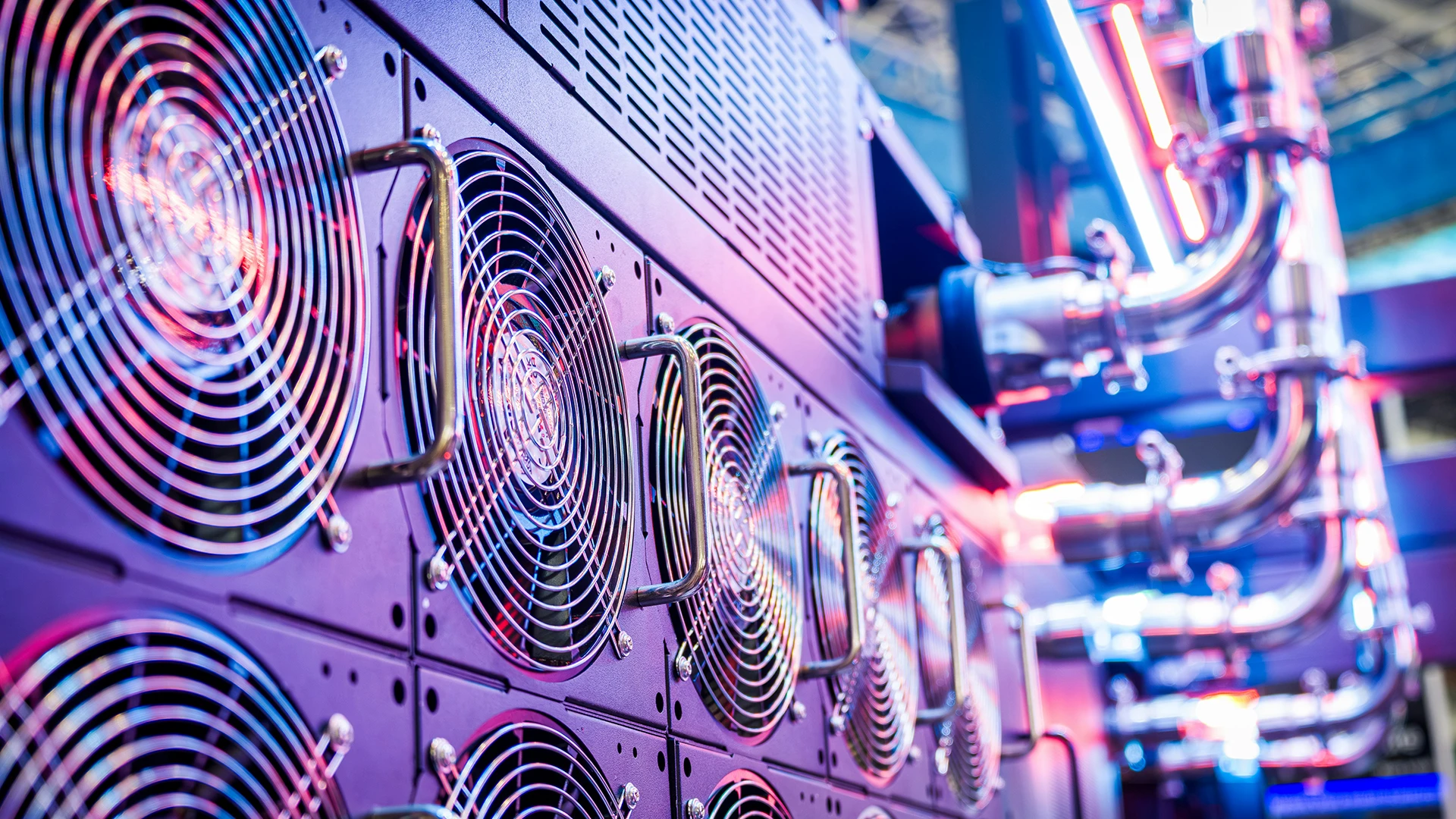
Large-model training is reshaping data center architecture.
In clusters running thousands — or even tens of thousands — of GPUs, the real bottlenecks are no longer single-port speed. They are:
As computing power scales exponentially, networks confined to "high-speed forwarding" become the new performance ceiling.
That is why more enterprises are redefining the value of data center switches: it is no longer about comparing parameters, but about the capacity to deliver computing power.
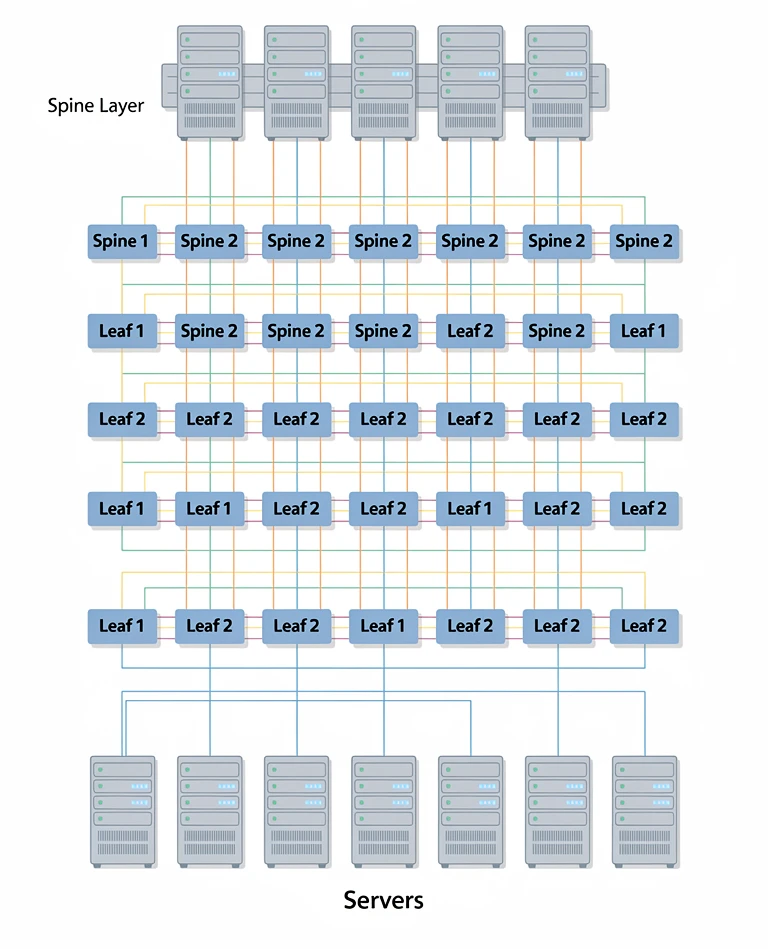
Spine-Leaf Architecture
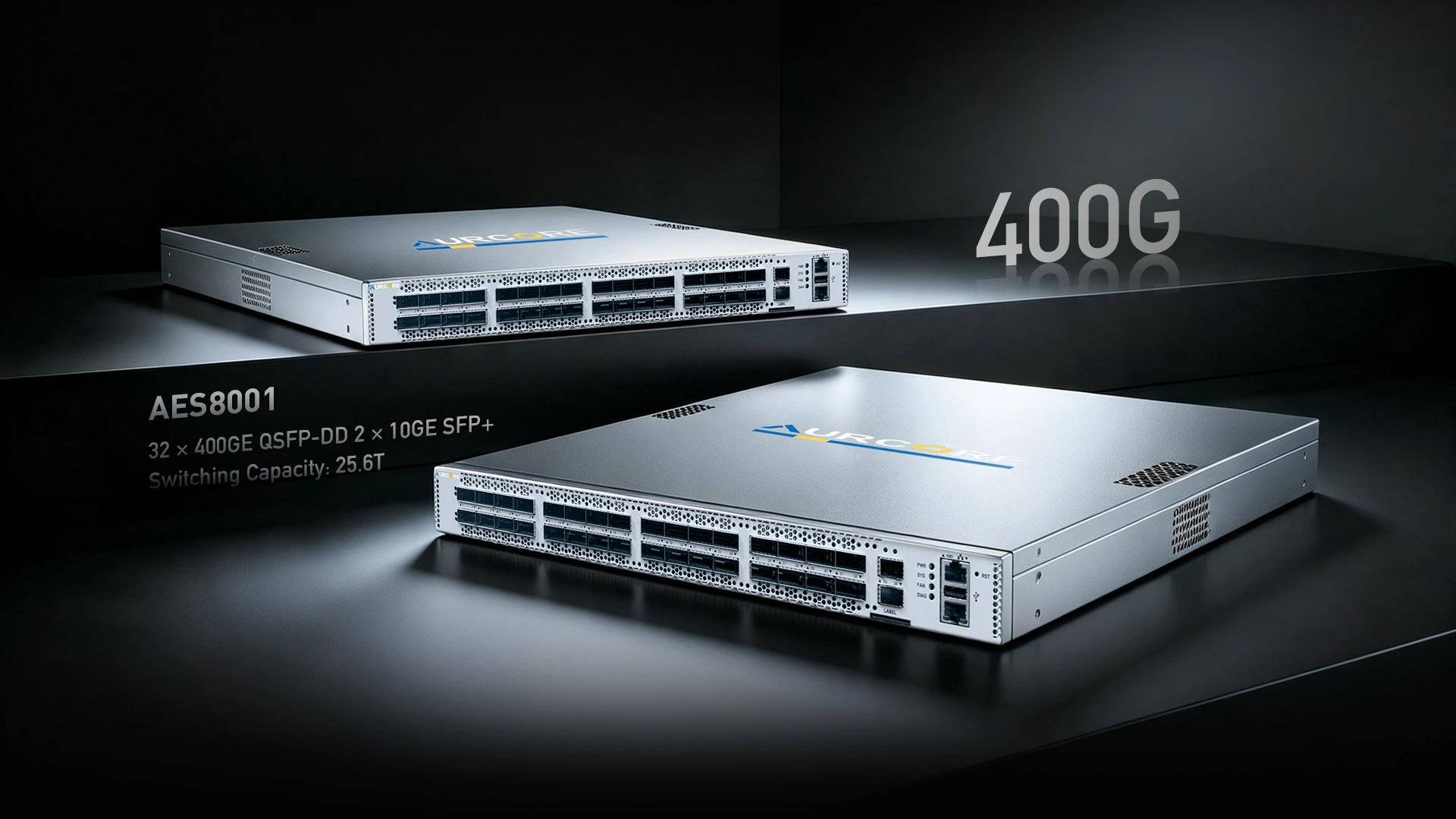
400G AI Switches
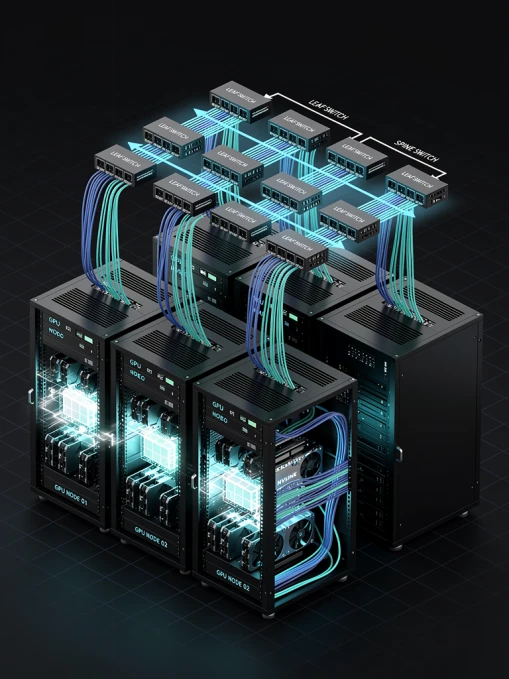
GPU Interconnection Topology
Genuine progress is not a simple leap from 400G to 800G — it is a shift from device-level thinking to architecture-level thinking.
AurCore's next-generation network approach rests on three core pillars:
a) Building a High-Bandwidth, Low-Latency AI Fabric Foundation 400G/800G high-density switching is foundational, not the final goal. The key is building a stable computing-interconnect architecture that ensures data consistency and sustained throughput across large-scale training workloads.
b) Enhancing Network System Stability Every disruption in an AI cluster can cost millions. The network must deliver:
This means switches are no longer just hardware — they are part of a system-level solution.
c) Upgrading to "Computing Power Network" Overall Solutions The era of standalone devices is ending. What customers truly need is:
Competitive advantage will come not from chip specifications alone, but from the ability to integrate systems end to end.
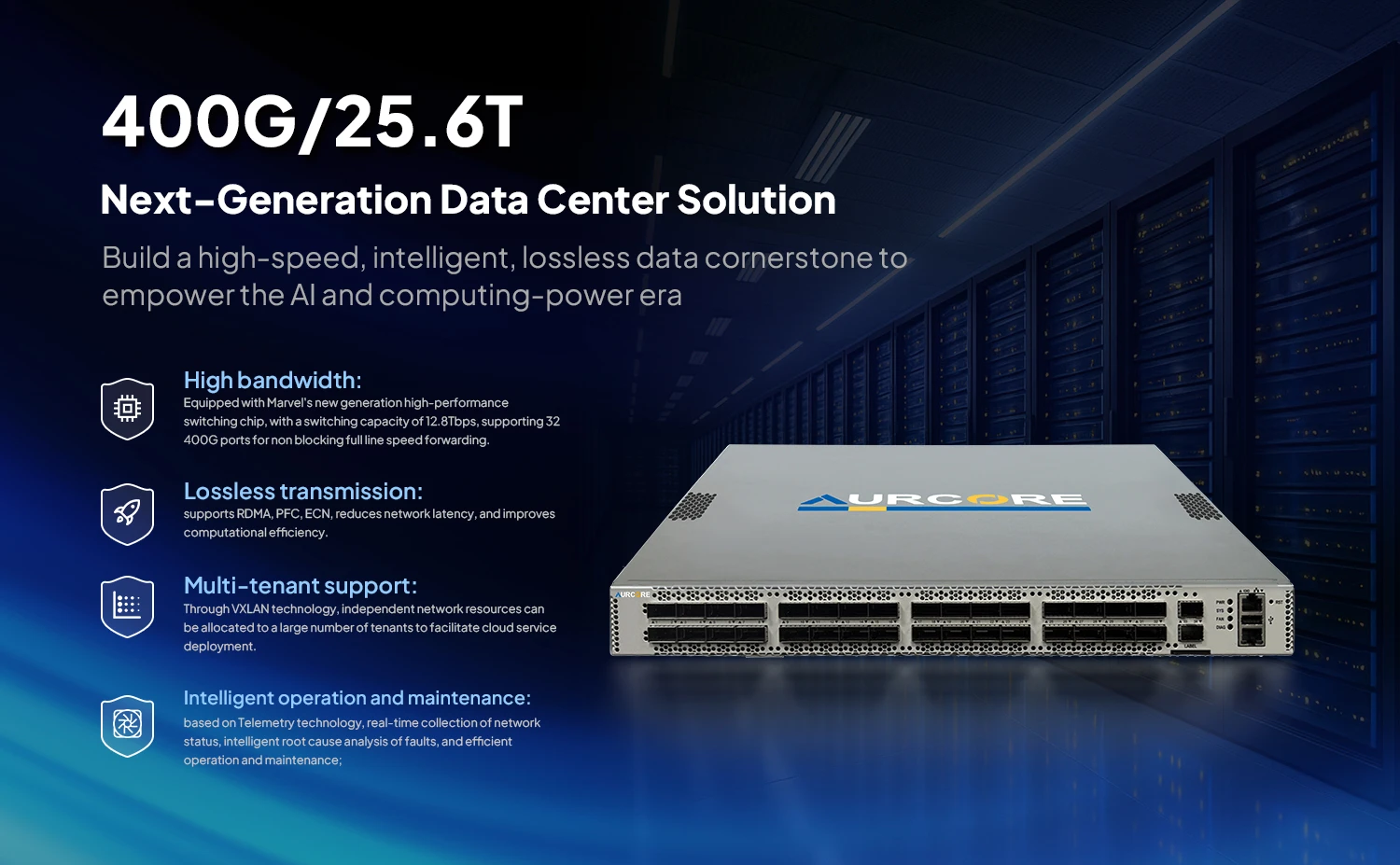
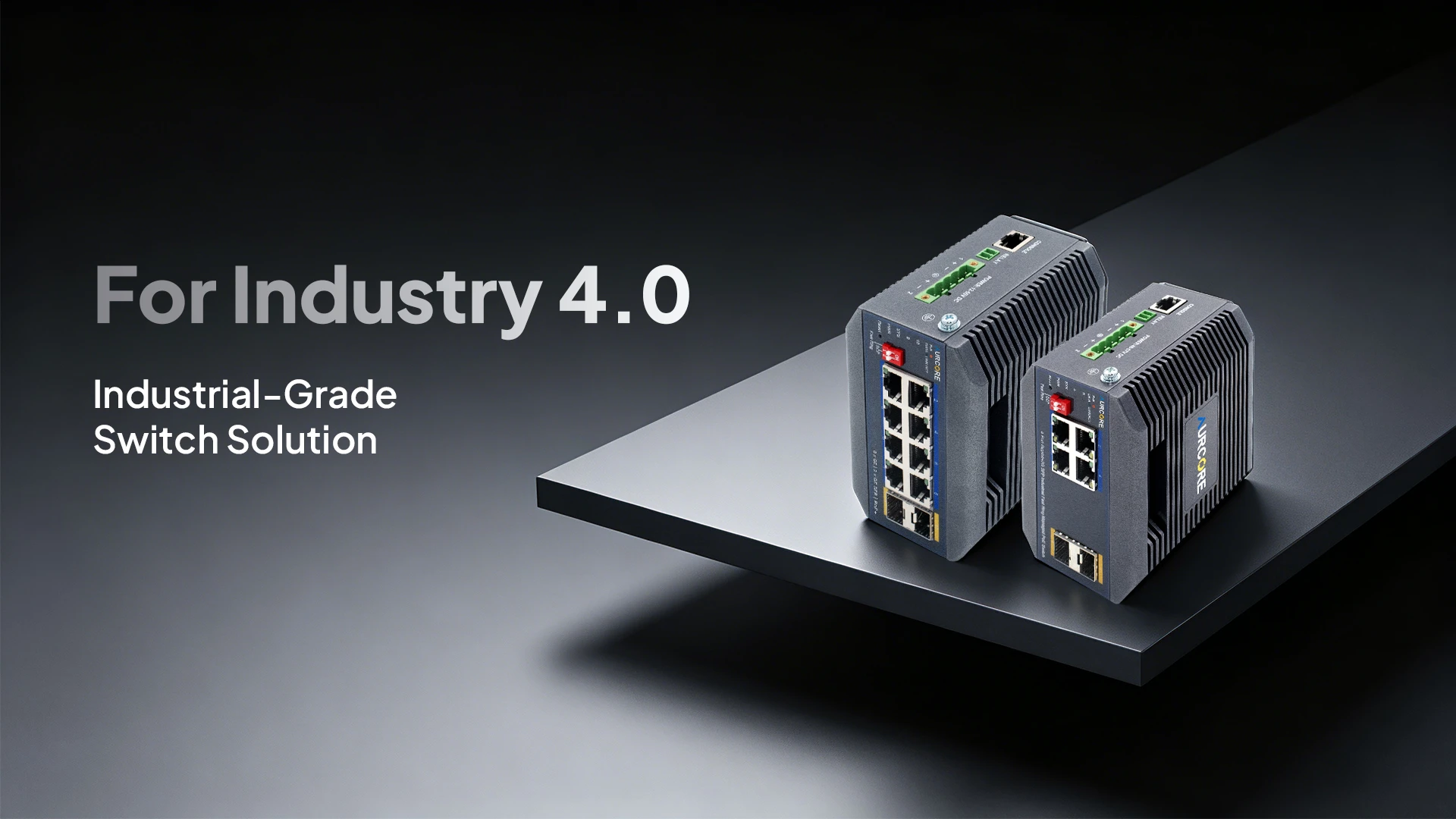
The switch industry's greatest risk is not technological stagnation, but over-reliance on a single path.
If competition remains focused only on port speed over the next three years:
The enterprises that build long-term value will be those that:
This is the logic behind AurCore's ongoing investment across data centers, its 2.5G/10G product series, and the M12 industrial interconnection solution — not to build a faster switch, but to create a more stable, efficient, and scalable intelligent network.
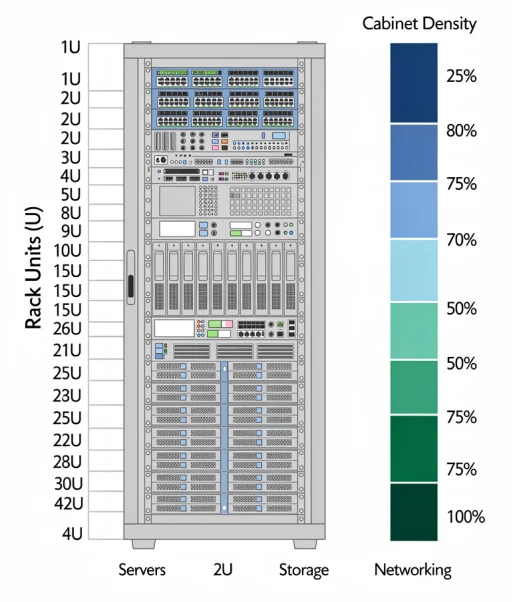
Cabinet-density Diagram of Traditional “Stacked Devices”
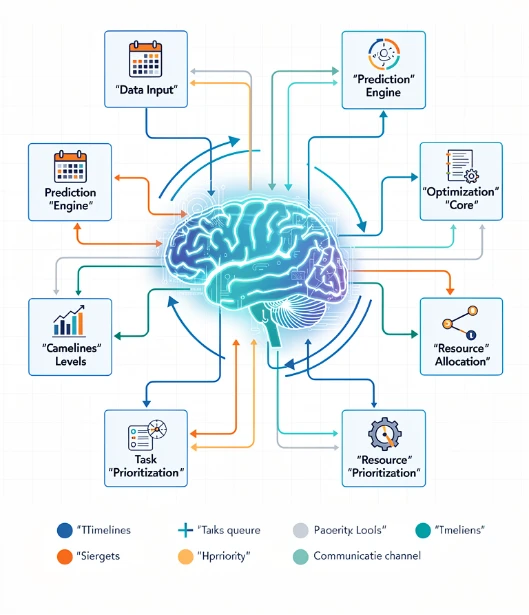
lligent Scheduling Network Schematic (Central-Brain-Centric View)
2026 will mark a real watershed.
As AI models continue to scale, enterprises will gradually realize that a 10% improvement in GPU utilization delivers greater business value than a generational upgrade in port speed.
Core network metrics will shift — from peak bandwidth to computing utilization, uptime, and energy efficiency per unit of output. This is a transformation from parameter competition to system competition.
In 2026, the real question for the switch industry will no longer be "Who has the faster ports?"
It will be: "Who can truly power the next generation of AI computing power networks?"
In this transformation, parameters are only an entry ticket. System capability is the decisive factor.
As the industry shifts from hardware competition to architecture competition, the winners will be the enterprises that have already built end-to-end computing power network solutions.